
JOSHI AGROCHEM PHARMA PRIVATE LIMITED
GST : 27AAFCJ1227Q1Z8

Call us
08045802215
Call us
08045802215
Isoproturon is non-persistent in soil; very photochemically stable, and stable to acids and alkalis,[1] but under sustained ultraviolet light can degrade into some eleven products,[5] and can be hydrolytically cleaved by strong bases on heating.[1]
Degradation is mainly N-demethylation and oxidation of the ring-isopropyl group. Variations in order give rise to a few possible pathways, and the balance of demethylation and oxidation can allow selective activity of the herbicide. Both reactions may occur, making a typical degradation product of 2-(4-Aminophenyl)propan-2-ol (also called Dimethyl-p-Aminobenzylalkohol),[5] which is an irritant and may be harmful if swallowed.[18]
Most isoproturon is expected to have degraded in soil after 6-28 days; the rate is temperature sensitive as the process is driven by enzymes and microbes.[1] In water, the DT50 is 40 days, and in water sediments 149 days.[7]
Metabolism in plants usually follows the path beginning with isopropyl side chain oxidation.[5] White-rot fungus has the lignin-degrading enzymes lignin peroxidase and manganese peroxidase which are known to degrade


Price:
Minimum Order Quantity : 1 Kilograms
Release Type : Controlled
Purity(%) : Other, 50% / 75%
Storage : Store in a cool, dry, and wellventilated area, away from direct sunlight and heat sources
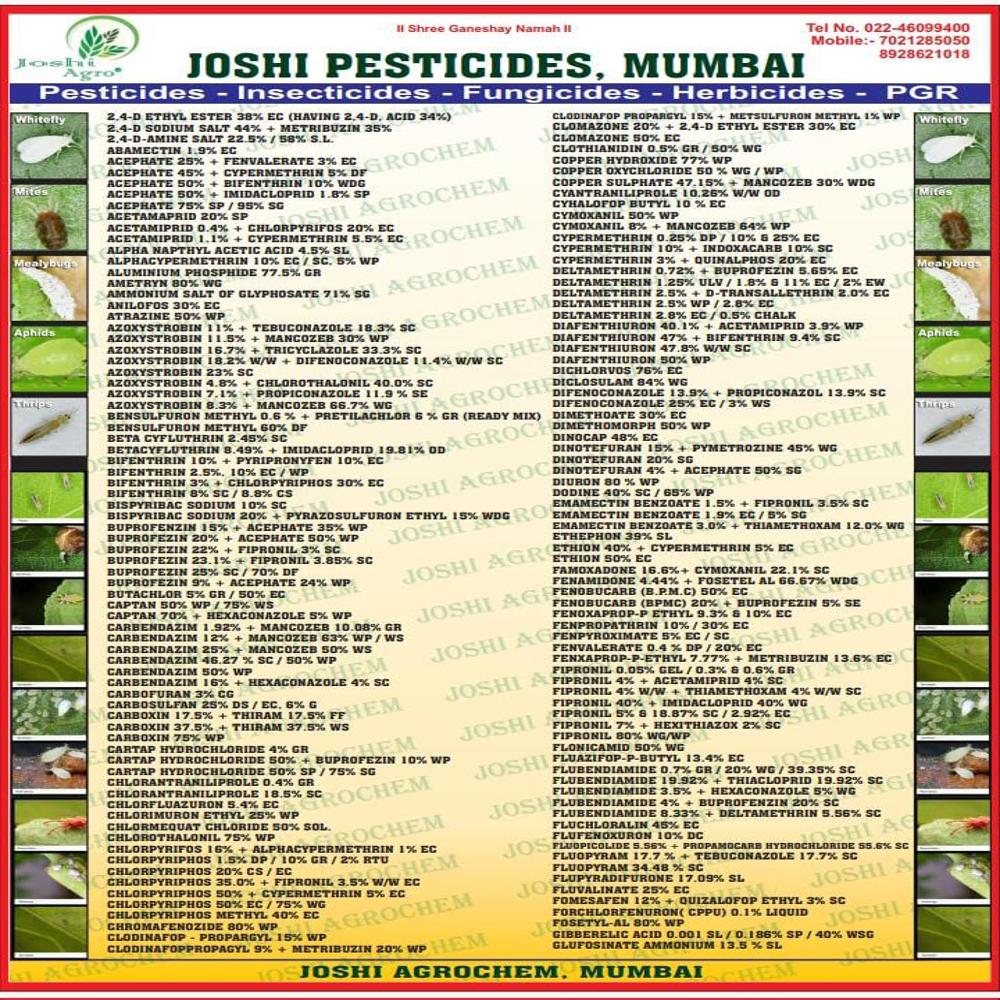
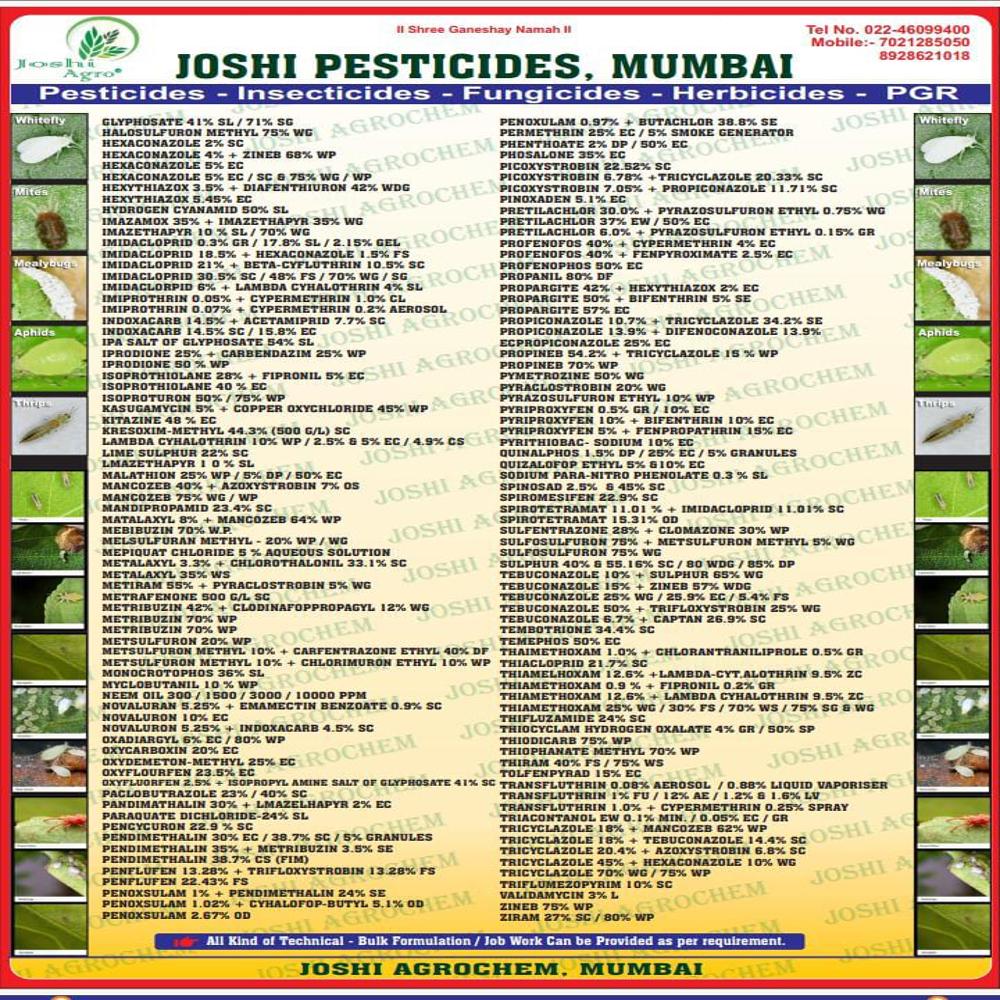
Chemical Name : Other, Isoproturon
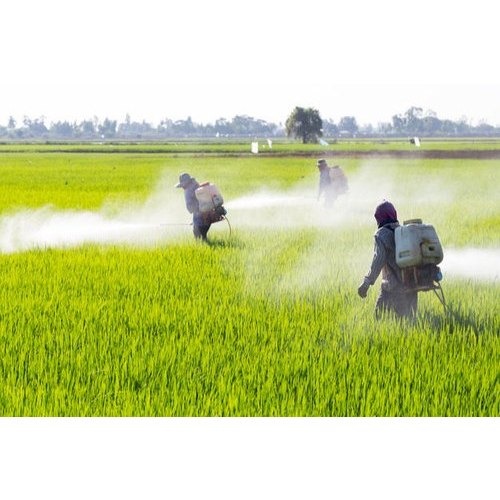
Dosage : 0.751.0 kg active ingredient per hectare, as per recommendation
Minimum Order Quantity : 1 Kilograms
Release Type : Other, Controlled Release
Purity(%) : Other, 10.26% w/w
Storage : Store in a cool, dry place, away from direct sunlight and moisture
Chemical Name : Other, Cyantraniliprole
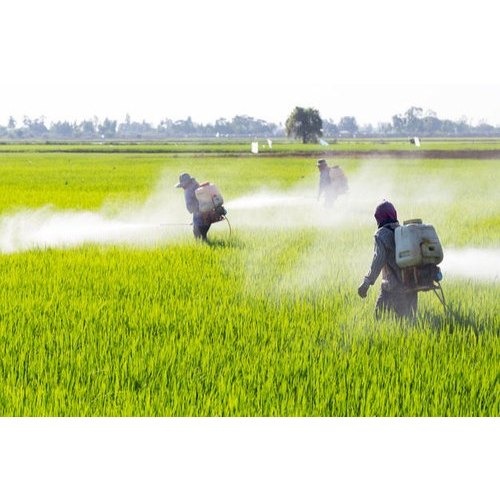
Dosage : Recommended at 150200 ml per acre (as per crop and pest)

Minimum Order Quantity : 1 Kilograms
Release Type : Other, Controlled Release
Purity(%) : Other, 56.4% (w/w) Active Ingredient (Diafenthiuron 47% + Bifenthrin 9.4%)
Storage : Store in a cool, dry and wellventilated place, away from sunlight and heat sources
Chemical Name : Other, Diafenthiuron 47% + Bifenthrin 9.4% SC
Dosage : Recommended at 400 mL/acre (may vary as per crop & pest)

Minimum Order Quantity : 1 Kilograms
Release Type : Controlled
Purity(%) : Other, 5%
Storage : Store in a cool, dry, wellventilated place away from direct sunlight and incompatible materials
Chemical Name : Other, Mepiquat Chloride 5% Aqueous Solution
Dosage : Recommended dosage is 250500 ml per acre, varies by crop and application method

 Send Inquiry
 Send Inquiry

